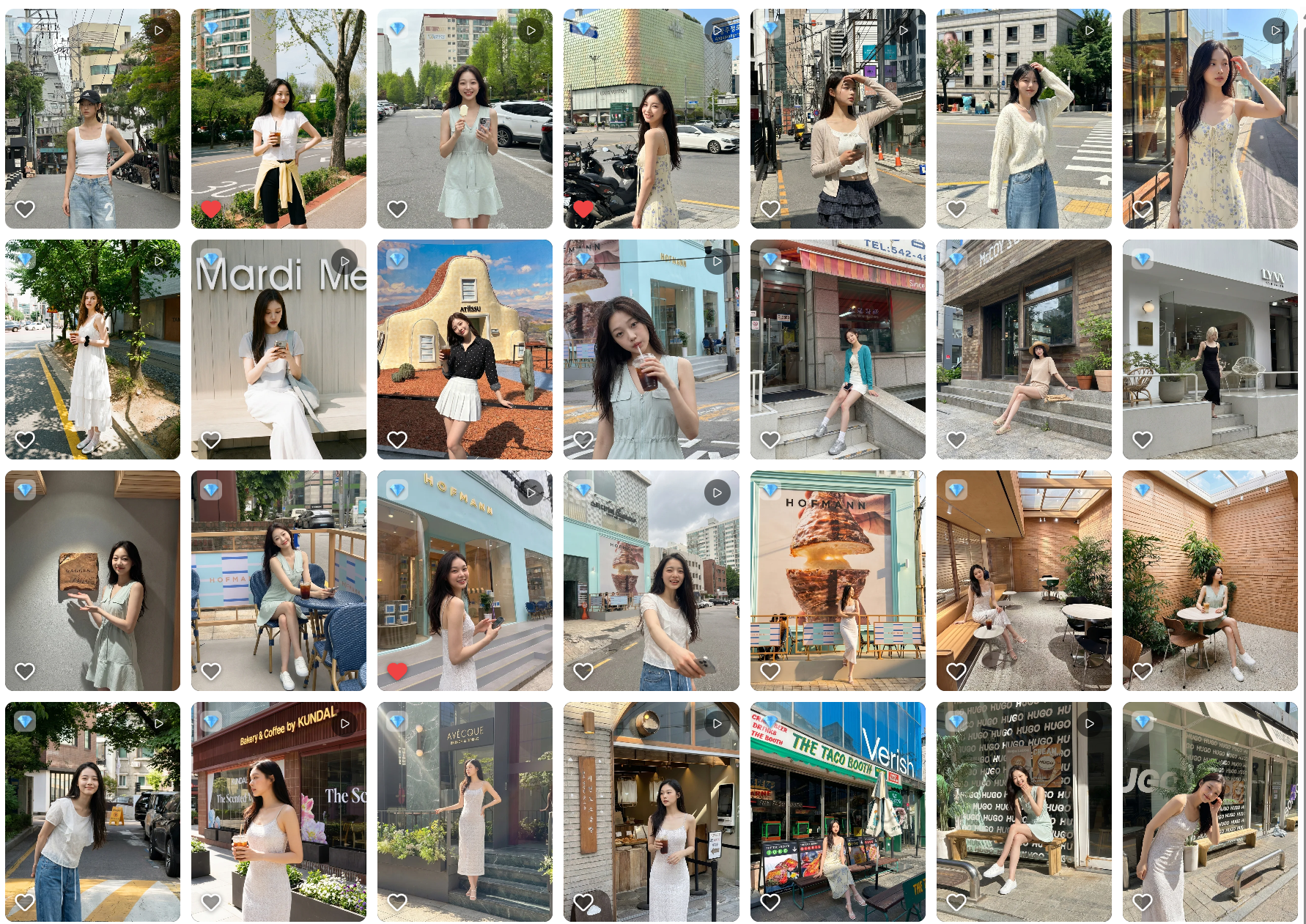
Everyone asks the same question when they first try AI product photography. "Are the results actually usable?"
That question resolves within a few months. Once you have confirmed the output holds up, a second question arrives. And the second one is much harder.
"Can our whole team run this, at several hundred items a week, indefinitely?"
This article is about that second question.
01 - Starting point At a certain scale, the problem changes species
A brand selling 20 products and a brand selling 2,000 use the same tools but do completely different jobs. On paper both are "making product images." Look at how the day actually goes and there is almost no overlap.
The person at the 20-product brand spends time on a single item. They try different backgrounds, re-run a few poses, and stay with it until they get a shot they like. What matters here is how expressive the tool is.
The person at the 2,000-product brand cannot spend time on a single item. There is a list of new arrivals, there is a deadline, and they have to get from one end to the other. What matters here is not expressiveness. It is that the flow never breaks.
| Small-scale operation | High-volume operation | |
|---|---|---|
| Core question | Did this shot come out well? | Did we clear this week's volume? |
| Unit of work | One photo | One garment, and every shot of it |
| Bottleneck | Odds of a good result | People, tracking, handoff |
| What failure looks like | The photo looks off | Nobody knows how far along we are |
Nothing in the right-hand column goes away by improving output quality. These are a different species of problem.
02 - Where volume actually breaks down It jams in the same four places
Talk to brands operating at scale and the sticking points are remarkably consistent. Not because the tools are bad, but because most tools assume a single person working alone.
-
People Several people share one login
Two merchandisers, a designer, and a freelance editor all sign in with the same account. There is no way to tell who made what, or who deleted what. When someone leaves, there is nothing to hand over. When someone joins, you explain everything from scratch. Billing sits on one person's card, so the team stalls when that person is on leave.
-
Tracking Nobody knows how far along the work is
To check how many of the 220 items are done, someone ends up building a separate spreadsheet. Then that spreadsheet drifts out of sync with the actual work. When your generation history is stacked by date only, finding every shot of one specific product takes real time. Duplicates get made, items get skipped, and the checking itself eats a meaningful share of the day.
-
Handoff Finished images still get moved by hand
The work is not over when the image is done. You download it, rename it to match the product code, and upload it one by one into your internal system or store admin. Ten shots per product across 2,000 products is 20,000 files. This is where a typo attaches the wrong photo to the wrong item. And no one ever notices the hours it takes.
-
Assets The brand's visual identity lives in a personal account
The models you use, the backgrounds you built, the garment images you uploaded all sit under one employee's personal account. These are brand assets owned by an individual. When that person leaves, the visual tone you spent a year building walks out with them. If your team handles unreleased product images, there is a security question stacked on top of that.
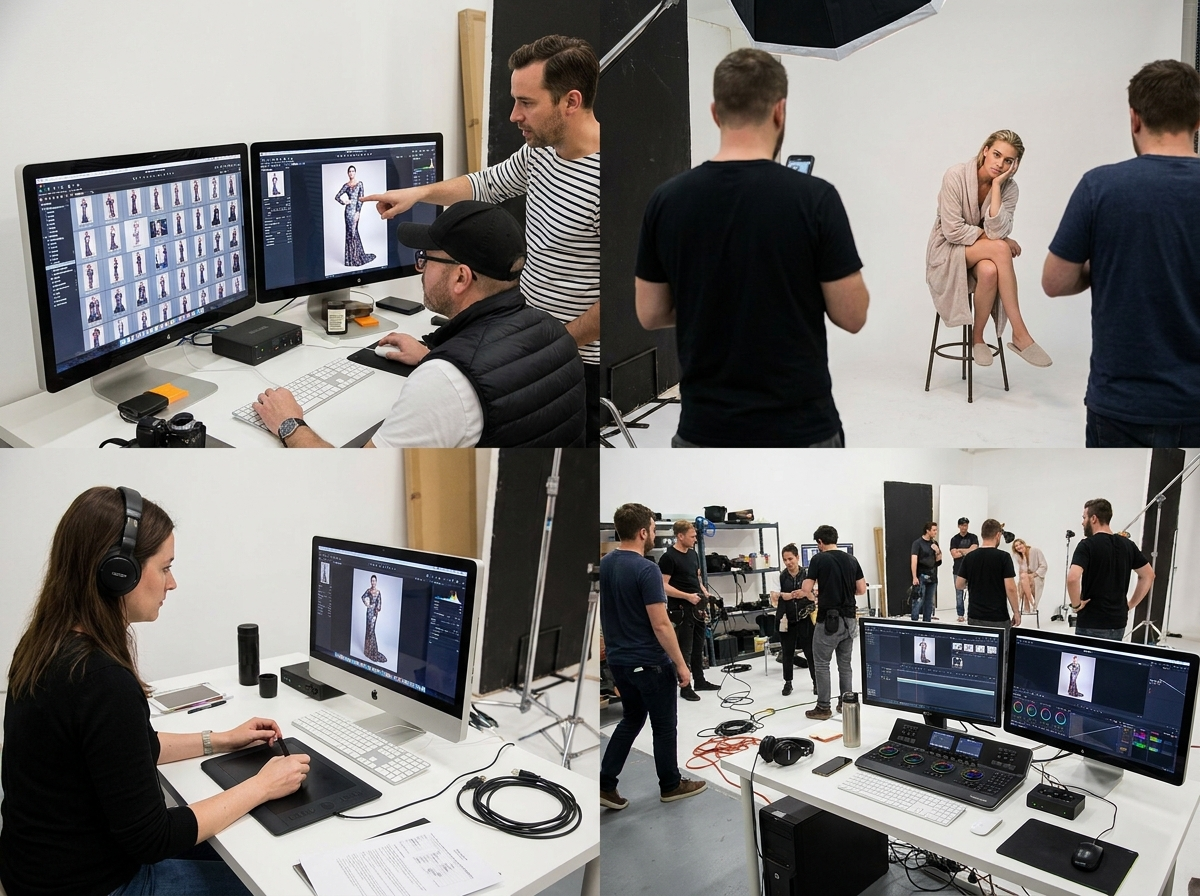
None of these four are fixed by an AI that makes better photos. They are not production problems. They are operations problems.
03 - What is actually needed Not a better tool. A production line.
It helps to rotate the frame here.
What a brand at scale is looking for is not a better tool. It is a line that runs every week. New arrivals enter, move through a fixed sequence, get handled by several people in parallel, pass automatically to the next stage when finished, and leave a visible answer to "what is still outstanding?" at any moment.
This is also, roughly, what brands have always bought when they sign with a photo studio. An annual studio contract is not a purchase of photographs. It is a purchase of someone who schedules, a channel that tells you where things stand, and a process that repeats.
StyleRoom Enterprise was built from that view. It is not a bigger version of the individual plan. It is a production environment for a team.
04 - What Enterprise changes One answer for each of the four bottlenecks
Instead of passing around one login, you invite members. Everyone signs in as themselves and draws from a shared organization credit pool. Pool credits stay valid for twelve months, so instead of burning them down every month you can concentrate them into the run-up to a season. Who created what, and how much, is visible in the usage dashboard.
Permissions split into owner and editor. Billing, member management, and deletion of organization assets sit with the owner; production itself is identical for every member. When staff change, the work history and the assets stay with the organization. Handover becomes an invitation rather than a file transfer.
Generation history can be viewed by garment rather than by date. One garment is one row, and every shot made from it sits in that row. Search a product code and everything for that item comes up at once.
Each row shows progress: how many shots exist, and how many have been sent onward. The reason for keeping a side spreadsheet disappears, and skipped items and duplicate work become visible instead of inferred. You can switch between the whole team's work and only your own.
The download-rename-reupload stretch goes away. Teams working by hand select the shots they want from the garment view and export them directly; teams that want automation call a REST API from their own commerce system. Image upload, generation request, a completion webhook, and result download can all be stitched together in code.
Either way, the product code travels with the image, so your system knows which item each one belongs to. Anything already sent stays marked as sent, so you never flip between two screens to work out how far you got.
Exclusive models, brand-only backgrounds, and uploaded garment images belong to the organization rather than to an individual. They survive staff changes, and a new member has the same assets the moment they are invited. When a member leaves, their access ends but their work stays.
Exclusive models and backgrounds are never exposed to other brands. As more brands adopt AI imagery, "a model I have seen somewhere before" becomes a real problem. This avoids it directly.
For teams handling unreleased products, isolated storage, access control, and audit logging come as standard. Brands worried about leaks can restrict access to specific IP ranges.
05 - One step further Exclusive models, made to order
Everything above is about tidying the flow. This part is about raising the output itself.
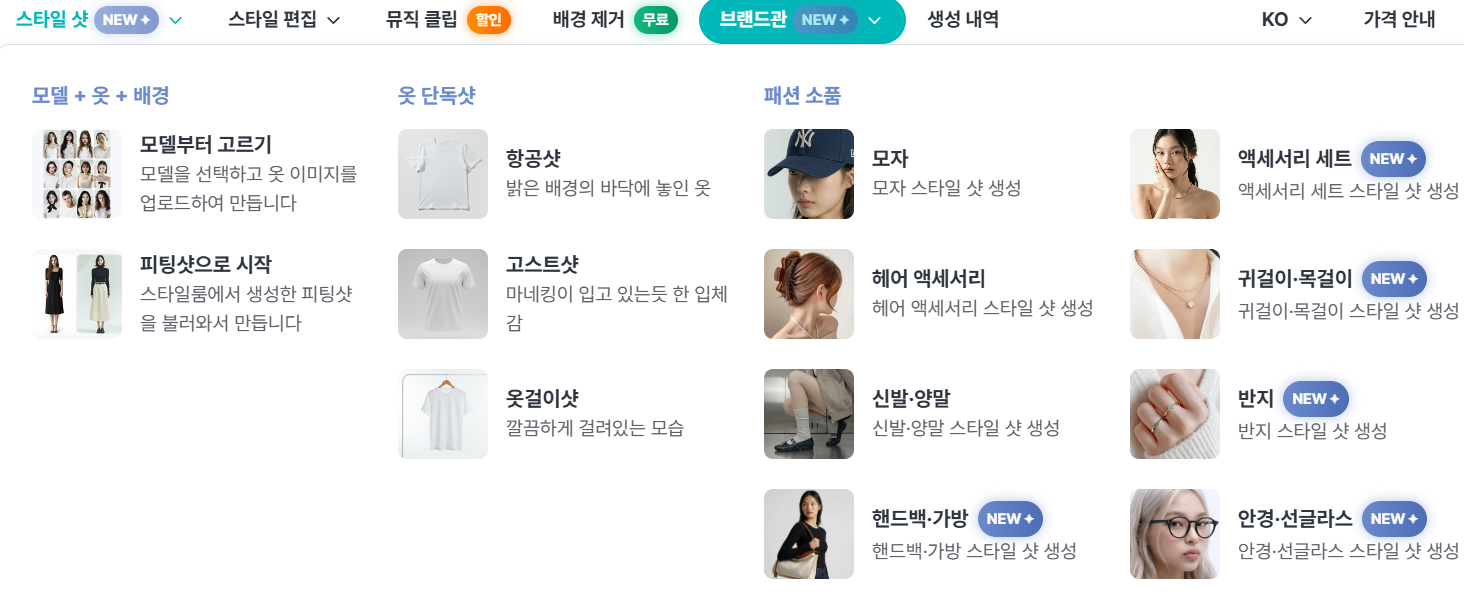
You could already pick a StyleRoom model and lock it to your brand. That is choosing from models that exist. Enterprise goes a step past that. We build the model your brand wants, from scratch.
You provide mood keywords, reference images, and the body type and tone you are after. We produce candidate models from that brief. You review, give feedback, and we revise. After a few rounds the final model becomes your brand's exclusive. No other brand can use it.
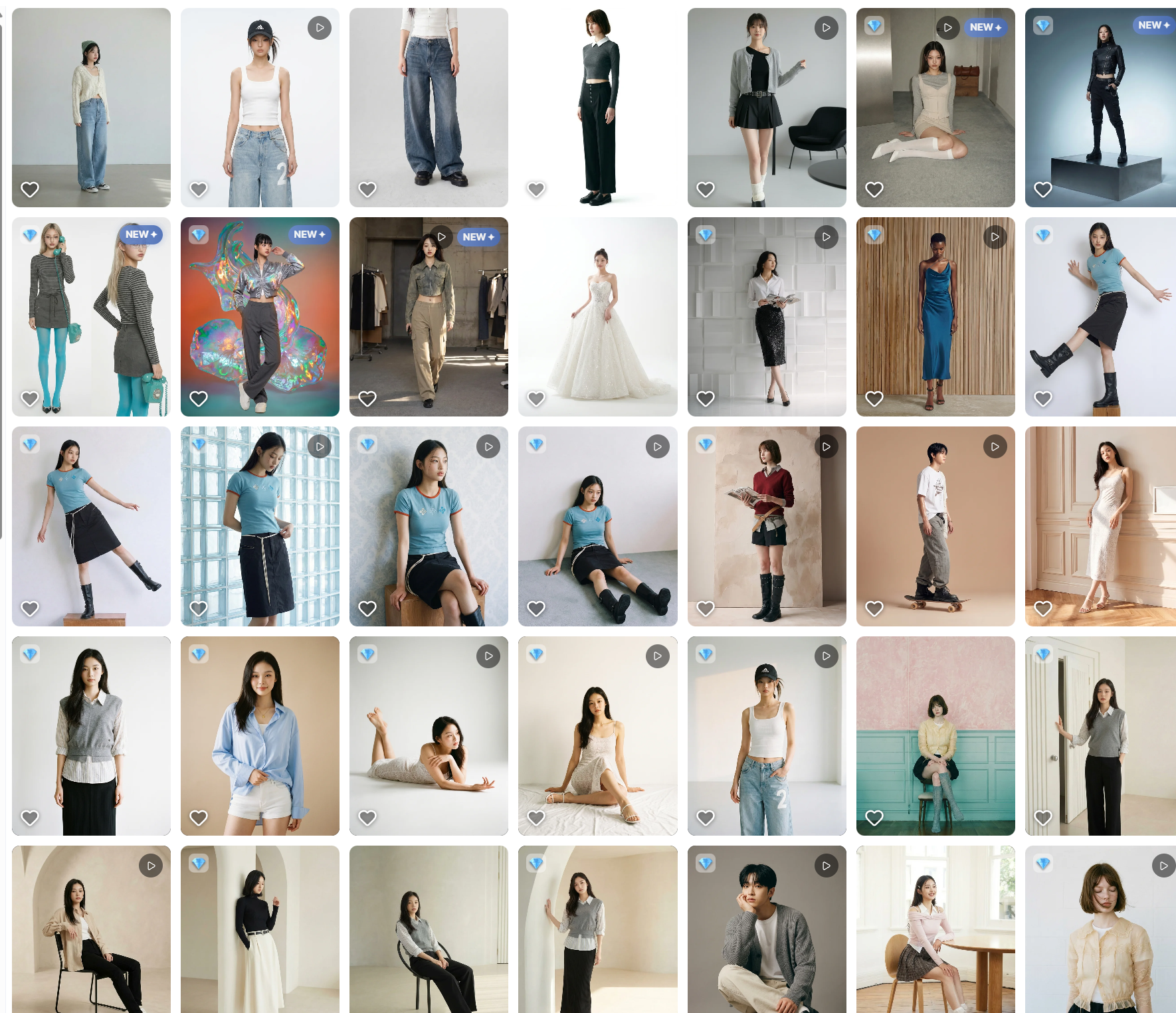
Backgrounds work the same way. Hand over a seasonal moodboard as reference and we produce a matching background set as a series, filed into your brand-only library. When the season turns, we build the next one.
Think of it as off-the-rack versus made-to-measure. Choosing and commissioning diverge sharply on one axis: how closely the result belongs to your brand. Because that model becomes the face of the brand as images accumulate, whether it was built for you or merely selected compounds over time.
06 - You do not do this alone Someone is assigned to you
Tool rollouts usually fail for a reason that has nothing to do with the tool. It gets adopted and then nobody really uses it. Hand over the logins with "you are all set" and that is the typical outcome.
Enterprise comes with a dedicated manager. They set up the team and the workflow with you at the start, build the initial configuration around your brand's mood alongside your team, and remain your point of contact afterward. Requests through the dedicated support channel get a response within 24 hours, whether it is a generation issue, a model adjustment, or an integration problem. Onboarding new members runs through them too.
You also receive a monthly report: how many shots were produced, which members used which features and how much, and what the same volume would have cost as a conventional shoot. It is written so you can put it straight into an internal review.
07 - About budget This is not a software subscription
The last thing that snags an adoption decision is usually which budget line it comes from. So let us be direct about it.
File an enterprise contract under software subscriptions and it looks large at most companies, because it reads against the price of internal tools. But this budget was never meant to come out of software spend.
Break down what a fashion brand spends on production every month and you get model day rates, agency fees, hair and makeup, studio rental, the photographer, and retouching. A realistic floor for a single shoot day runs from roughly 2 to 5 million KRW. That happens several times a season, and doubles whenever a reshoot is needed. We broke this down line by line in a separate piece on production costs.
The same number looks expensive under software subscriptions and cheap under production costs. And production costs are what it actually replaces.
So Enterprise is designed to resemble a retained studio contract more than a plan. You contract annually, a dedicated manager is assigned, exclusive models and backgrounds are built for you, and every month you get a report of what came out. The things you expect from an annual studio agreement are all in there.
08 - Is this you yet? Two or more, and it is worth a conversation
Not every brand needs Enterprise. Far more are well served by the individual plans. The items below are what brands who did adopt it had in common beforehand.
- Two or more people produce your product imagery, and they share an account
- Checking how many items you cleared this month means opening a separate spreadsheet
- Getting finished images into your internal system takes significant manual work
- When the person in charge changes, the settings and assets have to be rebuilt
- You handle unreleased product imagery, so security review is required
- You need a model specific to your brand and could not find one in the existing lineup
- Outsourced photography has effectively become a fixed monthly cost
If two or more apply, your current approach is probably no longer keeping up with your scale. And that gap widens with catalog size rather than closing.
A brand-owned production environment built for teams
Team workspace with a shared credit pool, garment-level history and direct delivery into your systems, made-to-order exclusive models, a dedicated manager and monthly reporting. Designed for volume from the start.
Talk to us
We will shape the setup around your catalog size and how your team works.
support@capbox.kr