There's a conversation happening about AI-generated product photos being "produced" - constructed rather than captured. That's accurate. It's also an accurate description of every professional fashion product photo ever made. The question isn't whether these images are built. They always have been. The question is who gets to build them.
01 - What actually happens Inside the studio, before a single usable shot exists
Take a pair of trousers. A major fashion retailer wants to photograph them. Here's what actually happens before you see the product page.
The model is selected from an agency roster. She's likely between 175 and 180 centimeters tall, with body proportions that fewer than five percent of the women who will actually buy those trousers share. The trousers themselves are a sample - often a size smaller than what will ship to customers, pre-hemmed by the stylist at a length chosen for the model's specific height.
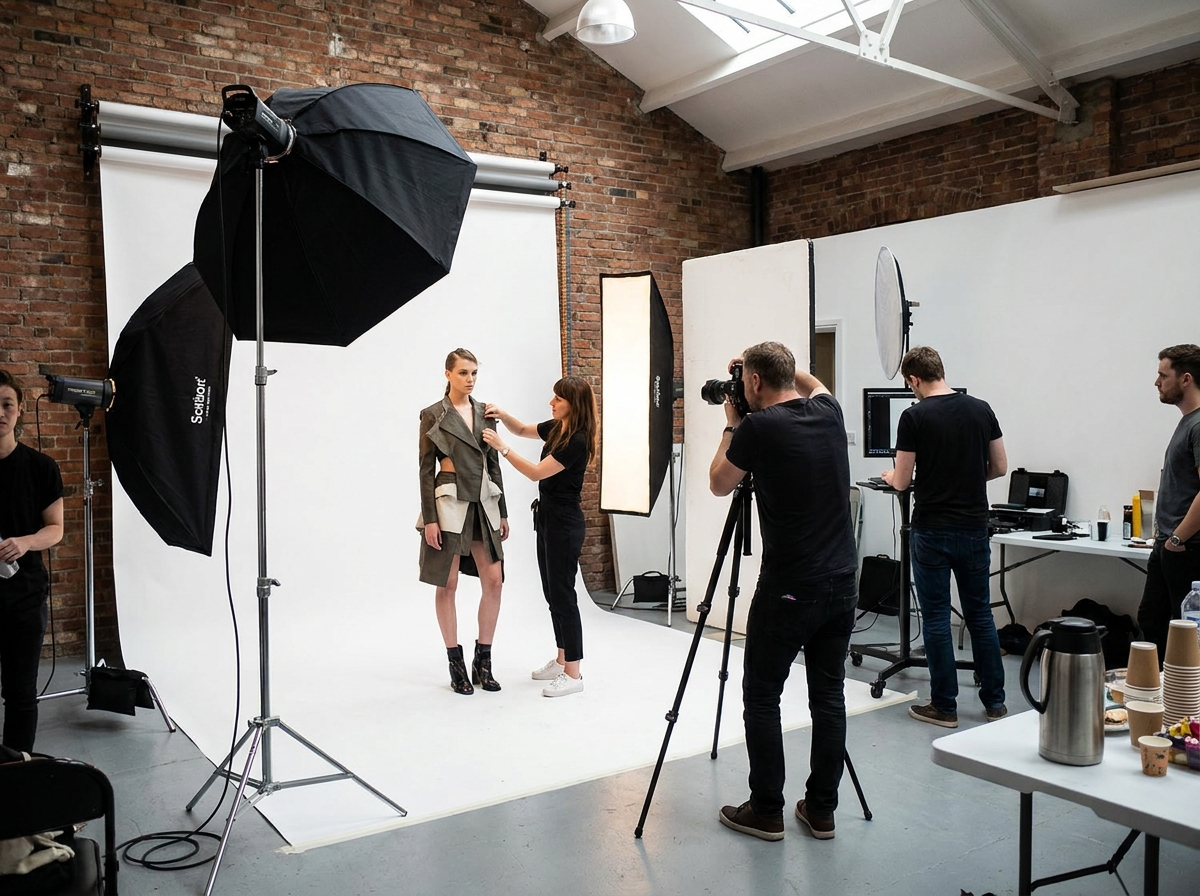
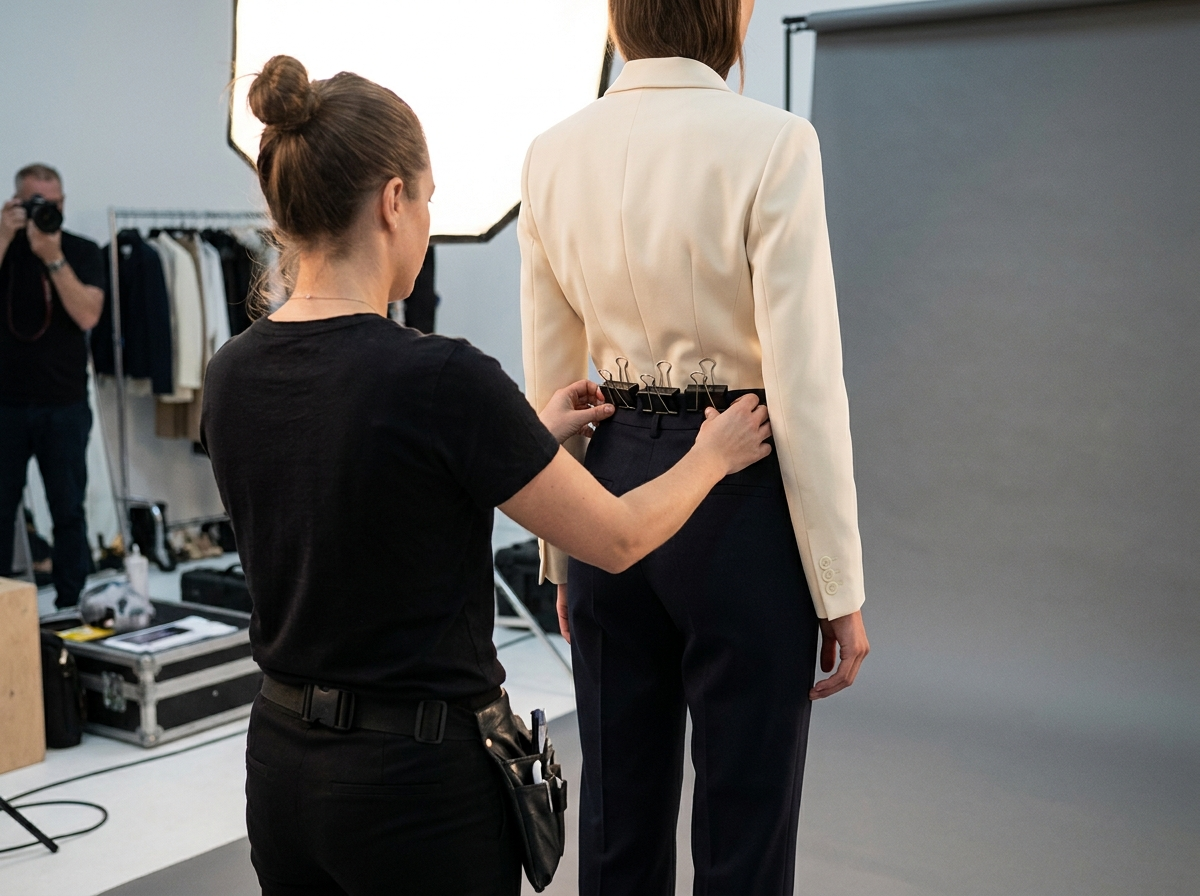
Before the camera turns on, the stylist stands behind the model with a handful of binder clips. The waistband is pulled tight at the back and clipped. The fabric at the hips is gathered and pinned. The front of the trousers looks like a perfect fit. The back looks like it's been attacked by an office supply store. This is standard practice on every professional shoot - not a workaround, but the expected procedure.
The lighting rig costs more than most small retailers' monthly revenue. Softboxes eliminate shadows that would reveal fabric inconsistencies. A reflector fills in the inner leg detail. The model holds a pose that no one actually stands in - slightly turned, one hip forward, weight shifted - because that specific configuration makes the trouser leg fall in a way that photographs best.
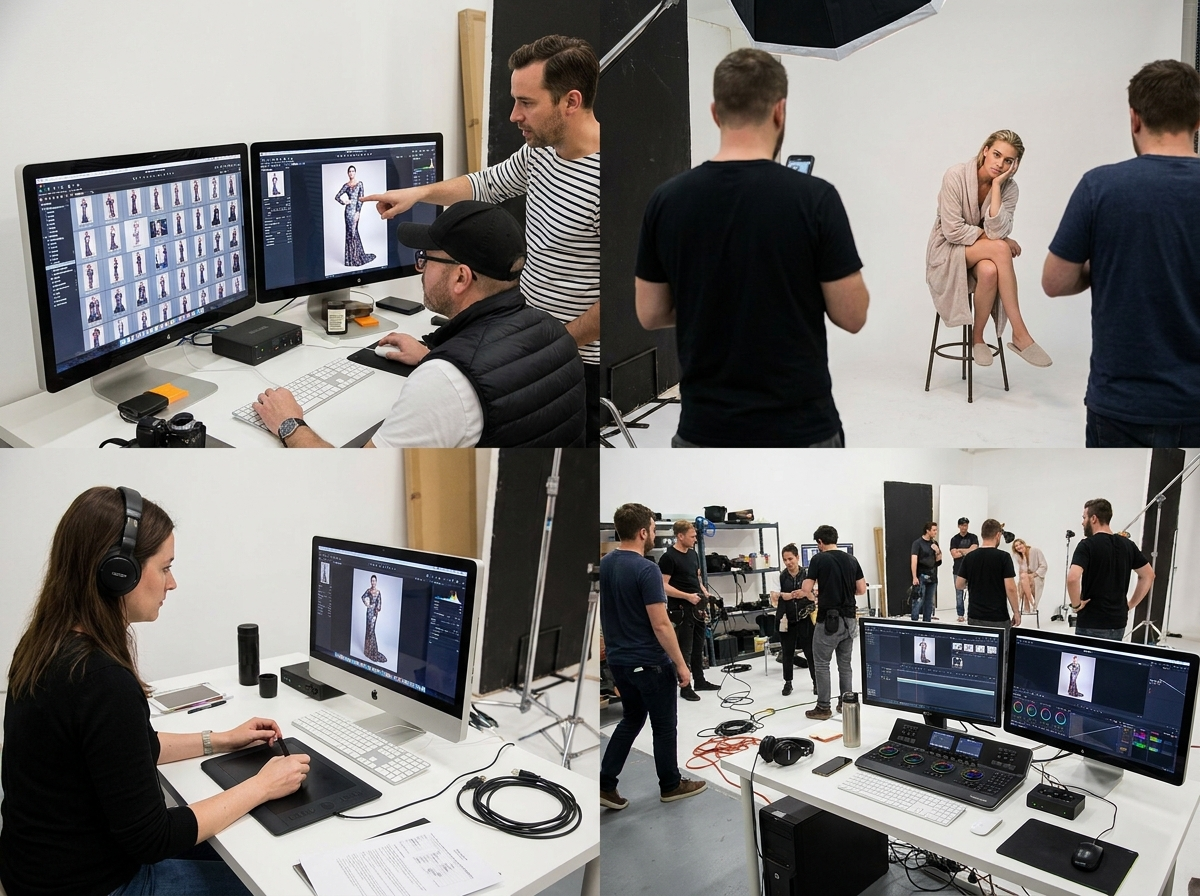
After two hours, the photographer has three hundred frames. Two hundred and eighty are discarded. The twenty that survive go to a retoucher: the faint outline of a binder clip that crept around the hip in one frame is removed; a knee wrinkle that only appears in photographs is smoothed; the color is corrected back to match the actual product, because studio light shifts it; in some cases, the silhouette is adjusted slightly. The final image is chosen.
It looks effortless. It looks natural. It looks like a woman just happens to be standing there in those trousers. None of it happened naturally. All of it was constructed to serve a specific purpose: helping buyers imagine the product on themselves.
This is not a criticism. It's a description. Professional fashion photography has always been the practice of constructing a useful image - one that shows the product at its best, in a context that helps buyers decide. The entire industry, from the cheapest fast fashion retailer to the most expensive luxury house, does exactly this. The difference between brands has never been whether their photos are produced. It's always been how much production they can afford.
02 - The numbers What this production actually costs - and what it produces
The scale of this production infrastructure is worth understanding clearly.
That last number is worth sitting with. The elaborate production infrastructure - the models, the stylists, the lighting rigs, the retouchers - doesn't eliminate the gap between the photo and the product. It manages it. In many cases, it widens it. The more perfectly a photo is constructed, the further it can drift from what the buyer will actually receive and wear.
Brands with significant photo budgets have spent years and considerable money optimizing this construction process. The result is photos that are technically excellent - and that small and mid-size sellers have never been able to match, not because they don't understand good photography, but because the infrastructure required to produce it has been prohibitively expensive.
03 - What AI fashion photography actually is The same goal. A different production method.
AI-generated product photography does the same thing traditional studio photography does: it constructs an image designed to help buyers imagine a product on themselves, in a context that makes them want it. The method is different. The purpose is identical.
In some ways, the AI production process is more transparent than the studio one. The constructed nature of AI-generated images is increasingly disclosed and understood. The binder clips, by contrast, have never appeared in a product photo. No stylist has ever been credited in a listing. The construction has always been invisible by design - because making it visible would undermine the effect.
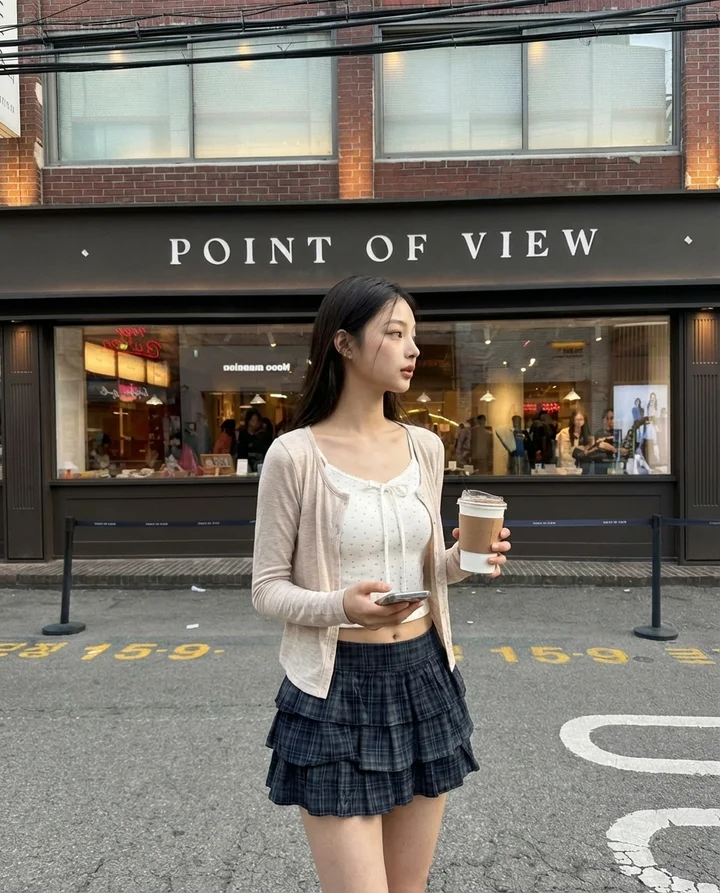
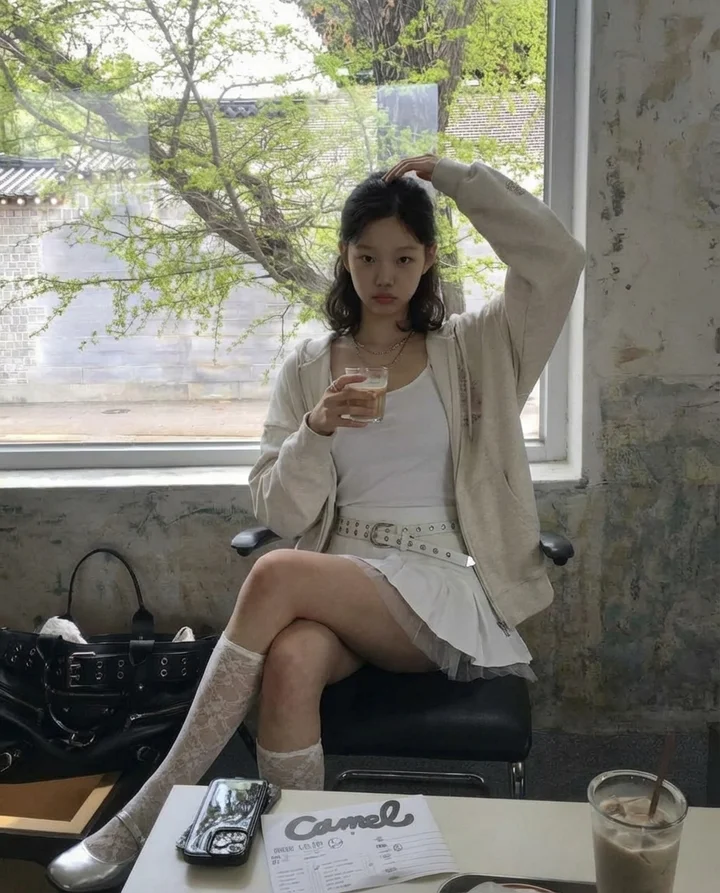
There are also things AI photography changes for the better. The model in a traditional studio shoot represents a body type shared by a very small percentage of actual buyers. AI generation allows for a range of models - different heights, different proportions - without the agency fees and scheduling constraints that make that impractical in traditional production. The trousers can be shown on the kind of body that actually buys them.
The question has never been: is this photo natural? Fashion photography has never been natural. The question has always been: does this photo help the buyer make a good decision?
That question is answered the same way it always was - by what buyers do after they see the image.
04 - What changed Access. Not the fundamental thing itself.
Every time a production capability became more accessible - desktop publishing, digital cameras, social media advertising tools - the same concern appeared: standards would drop, the output would be indistinguishable from amateur work, trust would erode. In every case, what actually happened was that the production standard spread. More people met it. The floor rose.
What changed with AI fashion photography is the same thing that changed each time before: the cost of entry dropped significantly. The production capability that required a $15,000 shoot day is now accessible to a seller running a small operation on Shopee or Musinsa. The standard those buyers expect - shaped by years of looking at professionally produced fashion photography - didn't change. The ability to meet it did.
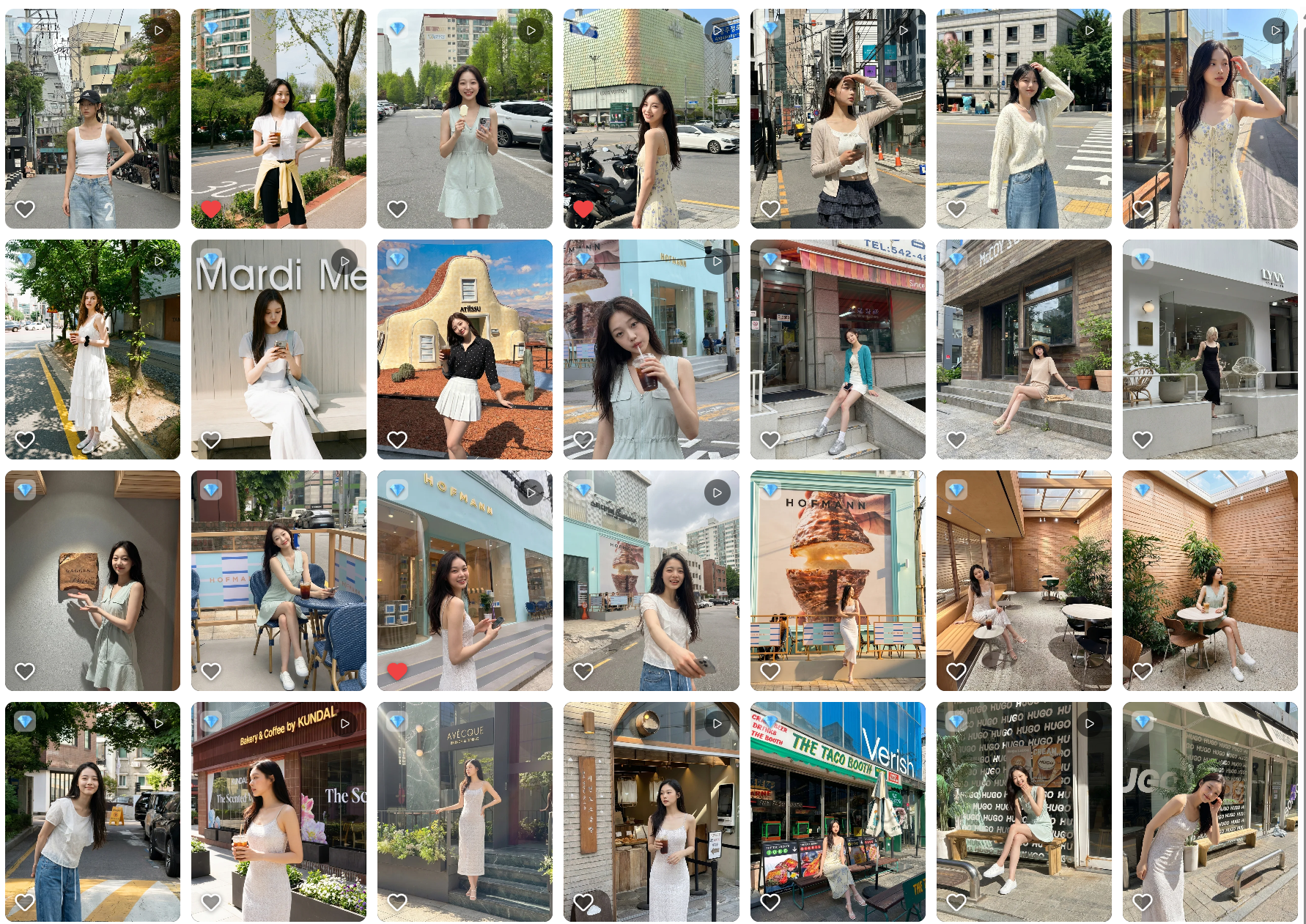
The brands that understand this aren't asking whether AI fashion photography is acceptable. They're asking the same question the industry has always asked about any production tool: does it meet the standard the audience expects? That question has a specific answer depending on who the buyer is and where they shop.
For buyers shaped by Korean fashion platforms - Musinsa, Ably, the visual language of K-fashion - the standard is high, specific, and well established. The photos need to read as Korean: the posture, the locations, the color temperature, the styling conventions. Generic AI photography doesn't meet that standard. Photography trained on Korean fashion platform data does.
The production capability - trained on the market with the highest standard
StyleRoom was built on Korean fashion platform imagery - the visual language that Korean buyers have spent years being calibrated to. Upload a product photo, choose a model and a Seoul location, and get wearing shots that meet that standard. No studio. No stylist. No binder clips.
Try StyleRoom
See what production-quality Korean fashion photography looks like on your products.