
Getting a product on Musinsa is harder than most international brands expect. Getting conversions after you're there is harder still. The failure point, in almost every case we looked at, was the same thing: the photos.
Not low-quality photos. International brands often invest heavily in product photography - professional photographers, good lighting, clean editing. The photos that fail on Musinsa tend to be well-lit, accurately shot, and technically correct. They just don't belong there. And Korean buyers notice immediately, even when they can't articulate exactly why.
01 - Context What Musinsa actually is - and why that changes everything about photos
Musinsa is Korea's largest fashion marketplace, with over 13 million monthly active users and a catalog that spans independent Korean designers to international contemporary brands. It's also meaningfully different from platforms like Amazon, Shopee, or even Zalando in one specific way: it functions more like a curated retailer than an open marketplace.
Getting listed isn't automatic. More importantly, getting listed without converting is actively worse than not being there - the algorithm deprioritizes low-engagement listings, which compounds the problem over time. Brands that launch poorly on Musinsa often find it harder to recover than if they'd waited and prepared properly.

The other critical context: Musinsa's buyers have been shopping this platform for years. They've developed a calibrated sense of what fashion photography is supposed to look like - not from fashion magazines, but from the platform itself, from Ably, from W Concept, from the specific visual grammar of Korean fashion content. That calibration is precise. And it's not forgiving of photos that don't match it.
Musinsa buyers don't consciously evaluate whether a photo is "Korean enough." They just feel whether it belongs - and move on in about two seconds if it doesn't.
02 - The findings Five failure patterns that showed up again and again
Across the listings we looked at, the same problems appeared with enough consistency to call them patterns rather than individual mistakes. Here's what we found.
03 - The root cause Five different problems. One explanation.
These five patterns look like separate issues - photo style, model choice, styling, lighting, production level. They're not. They share a single root cause: the photos were made for a different audience.
International fashion photography is optimized for Western e-commerce standards - clean, bright, professionally staged, consistently lit. It succeeds at exactly what it was designed to do. The problem is that Musinsa's buyers have been shaped by Korean fashion platforms, not Western ones. What reads as "high quality" on one platform reads as "not made for me" on the other.

Quality and fit-to-context are not the same thing. A photograph can be technically excellent and completely wrong for its platform at the same time.
Most of the international listings we looked at had genuinely good photography. The failure wasn't execution - it was that the photos were optimized for somewhere else.
The brands that do understand this usually discovered it the hard way: they listed, the numbers were bad, and they spent time figuring out why before relisting with different photos. The brands that figure it out before listing save themselves the algorithm penalty and the time it takes to recover from a poor launch.
04 - What works The visual profile of international listings that actually convert on Musinsa
The listings that performed - not just stayed live, but actually converted - shared a specific visual profile. It wasn't about having the highest production budget. It was about making photos that fit the platform's visual language.
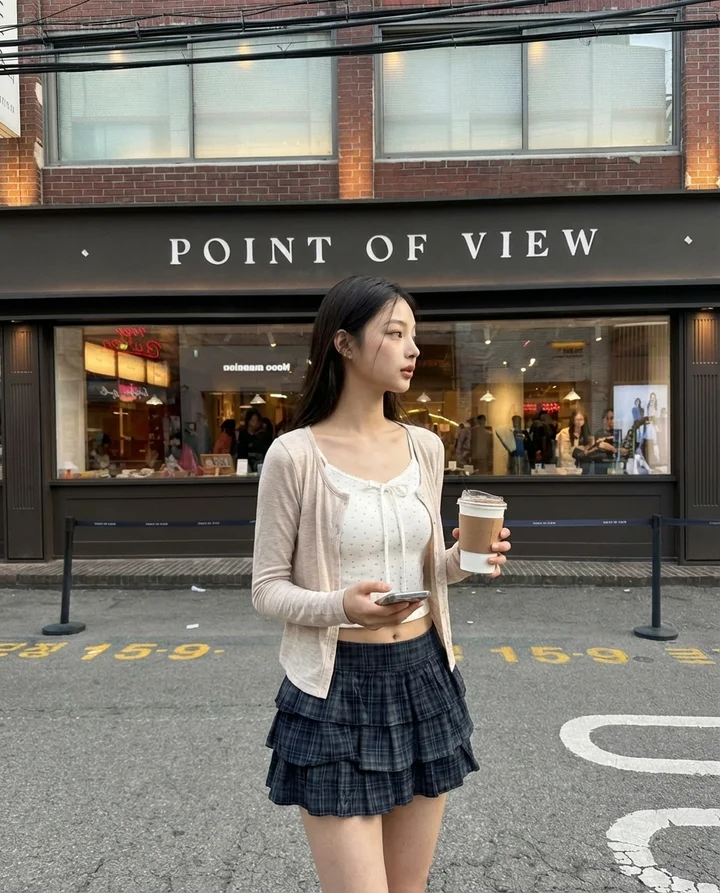

Location matters more than most international brands realize. A Seoul neighborhood - or a space that carries the visual associations of Seoul - tells Korean buyers something about the product before they look at the garment at all. Garosu-gil says one thing about a brand. Seochon says something different. A generic cafe background says nothing useful.


The posture and expression in working listings also had a consistent quality: they looked unposed. Not amateur - naturalistic. The model looked like she was doing something, not holding a position. That distinction is subtle in a still photograph but immediately registered by buyers who've spent years on a platform where that's the standard.
05 - Before you list A practical checklist for international brands preparing Musinsa photos
Based on the patterns above, here's a working checklist. It's not exhaustive - Musinsa has category-specific nuances - but it covers the failures that appeared most consistently across the listings we analyzed.
Musinsa Photo Readiness — Pre-Listing Check
Most international brands fail two or three of these at once. The studio-shot failure and the wrong-lighting failure often travel together, as do the model-context failure and the styling failure. Fixing one without addressing the others doesn't move the needle on Musinsa as much as brands expect.
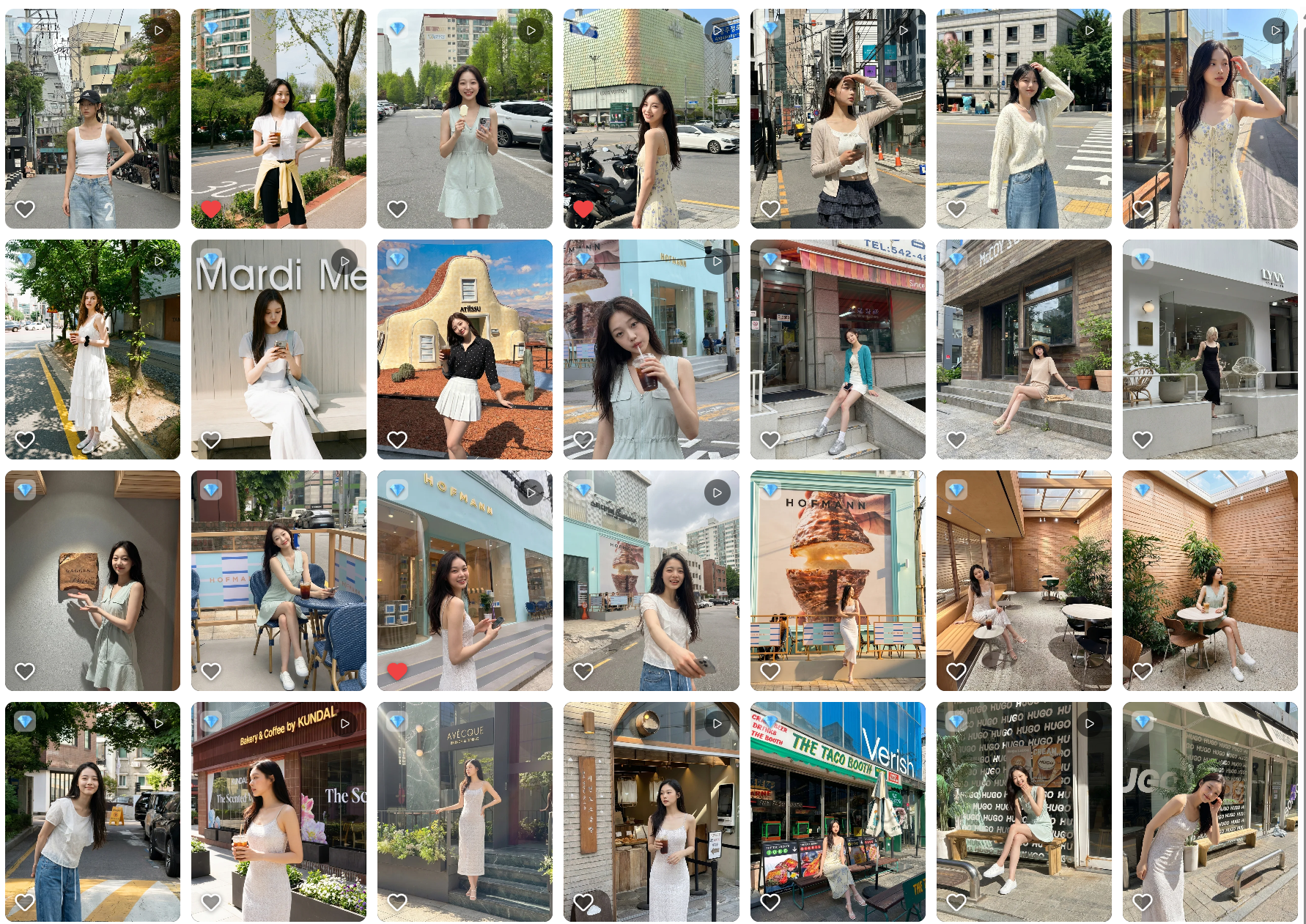
The brands that succeed on Musinsa treat the photo preparation as its own project - separate from their standard product photography workflow. The visual requirements are specific enough that trying to adapt existing photos rarely works as well as starting from the right brief.
If your existing product photos don't pass the checklist above, the fastest path to Musinsa-ready images isn't reshooting everything. It's generating new wearing shots built from the ground up on Korean fashion platform standards - trained on the visual language Musinsa buyers actually respond to.
Musinsa-ready product photos from your existing product images
Upload a product photo. StyleRoom generates Korean-market wearing shots - real Seoul locations, Korean fashion styling conventions, natural posture and lighting trained on the visual language of Korean fashion platforms. Purpose-built for the standards Musinsa buyers are calibrated to.
Try StyleRoom
Build photos that pass the checklist - before you list.